Author: Matt Keene

  • A Sunday in Bar Harbor

    A Sunday in Bar Harbor

    P1130829


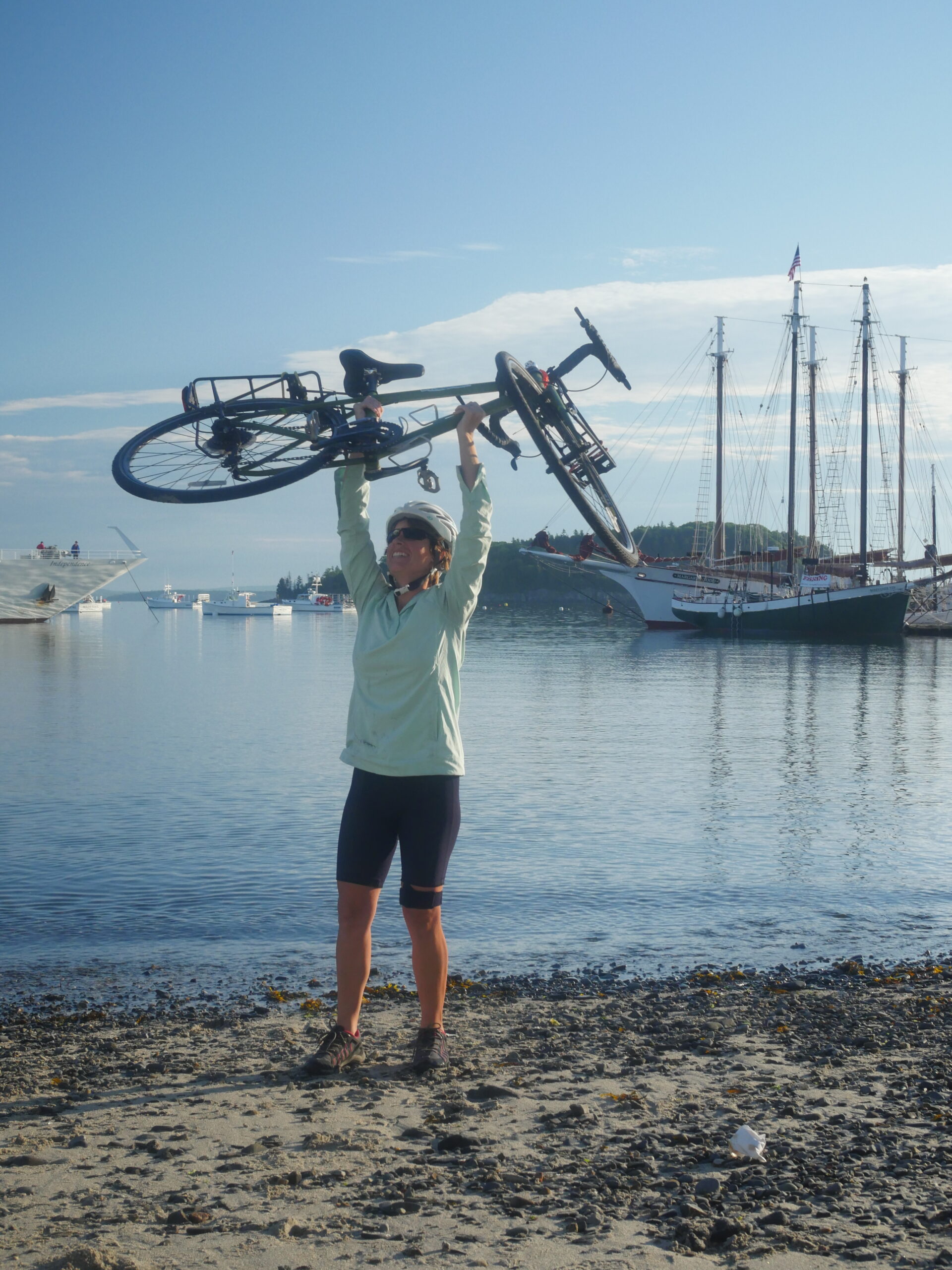
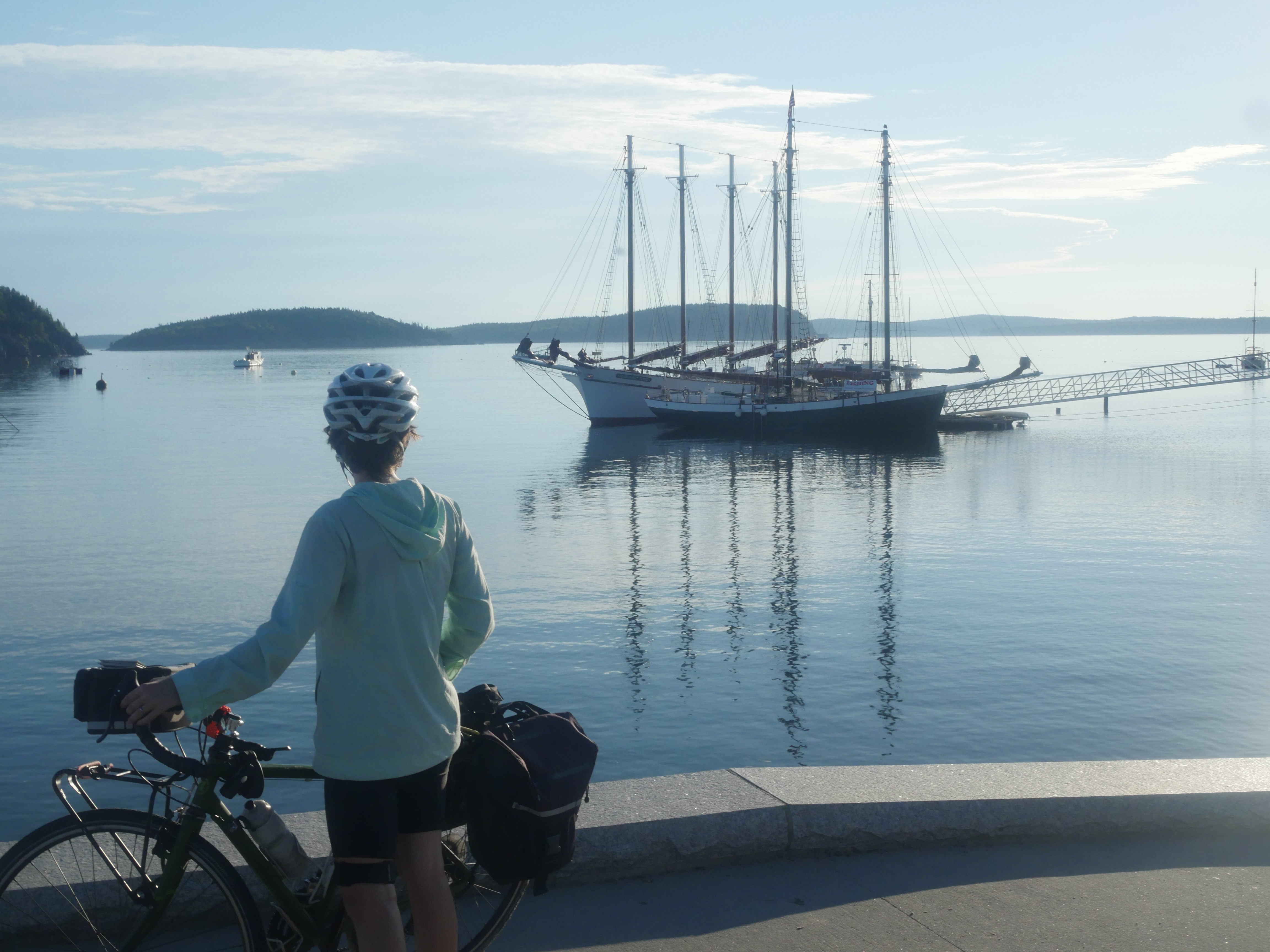
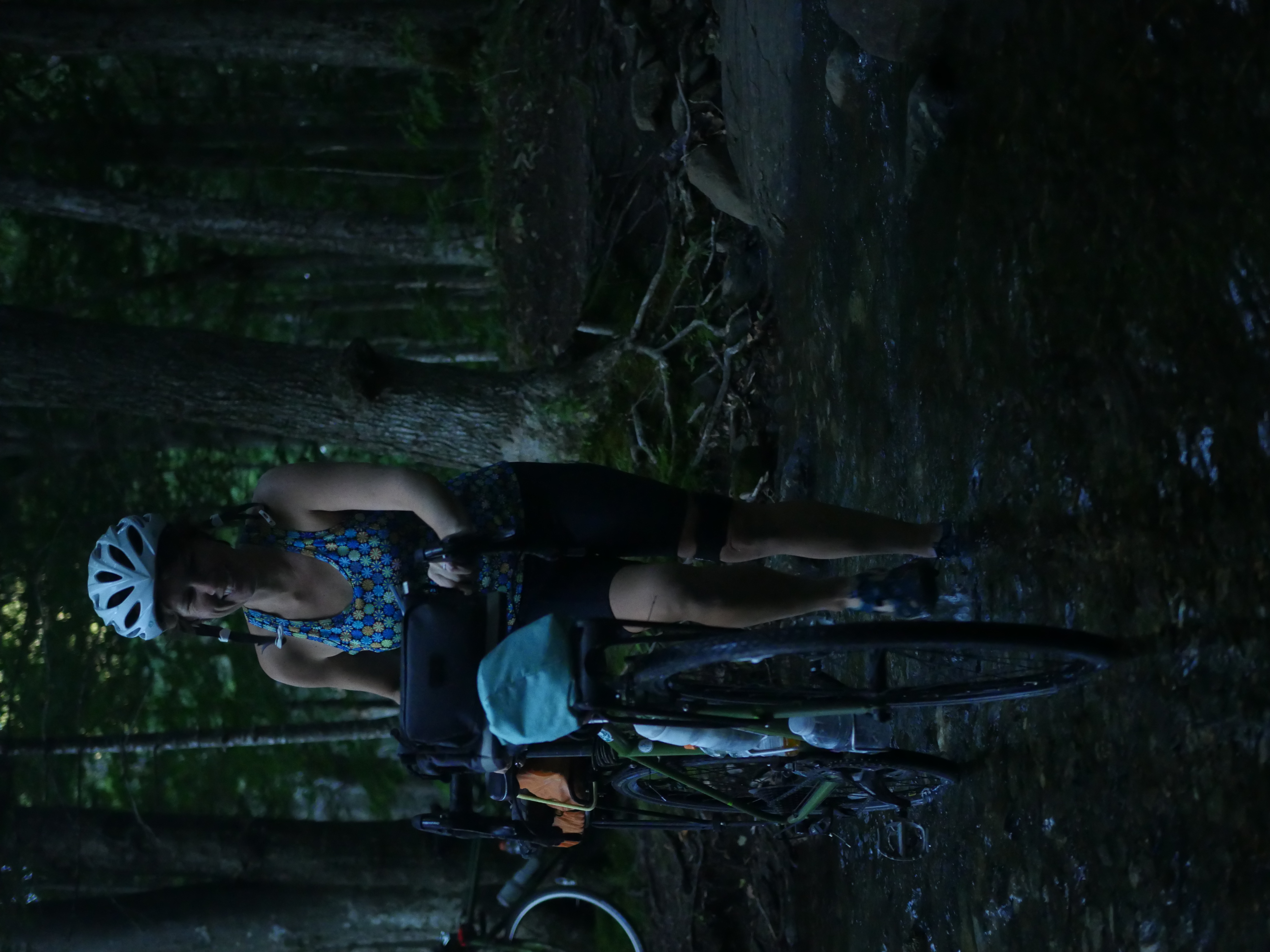
    Shortly after 7 am this morning, Jodi and I completed our last five miles of the Northern Tier, having bicycled more than 4,000 miles across the North American continent. We walked slowly and purposefully down to the cool waters of the Atlantic Ocean where the seawater lapped up over the rear tire of our bicycles, signalling the easternmost point of our journey. Bar Harbor was stirring to life behind the sea wall above us, greeting a new Sunday, a new day for rest, for contemplation, for faith and for dreams. 

    Our ending was very much like our beginning, a small, humble embrace of salt water that resounded only with the calling of seabirds, the caress of the wind and the gentle warmth of the rising sun.

    To all of you, we are profoundly thankful for your support, your prayers, your words of kindness. Dream big and dream often. Walk through fields of wildflowers and watch honeybees leave trails in the sky. Sink your toes into seashells on the beach and wish upon shooting stars. Love one another and extend kindness when you are affronted. Remember the preciousness of every day and the promise in the rising sun. Know that just as the changing tide erases and cleans, so too do we have endless opportunity for rebirth.

    Now, we sleep.

  • Moosilauke over the years

    Moosilauke over the years

    2007

    309313_281403391873750_8187433_n


    304910_281403331873756_624436_n

    2013


    1072504_680026698678082_766941576_o

    2015


    11754707_1144294722251275_2553612473123875349_o

    2016


    14102472_1451166958230715_1146117332813413486_n

    P1130378

    P1130389

  • In the absence of the aspen

    In June, the quaking aspen was the first tree I really took notice of. It shimmered on the roadside, its leaves trembling as the wind swept through it like the chill that runs through your body at the first touch of cold–that uncontrollable shake that runs up your spine. The quaking aspen appears forever caught in that tremble, its round leaves moving like a thousand tiny tambourines. The aspen showers the roadside with vibration, with life, with motion.

    I haven’t seen the quaking aspen since Montana. Its territory rises into Canada in the high plains of the Dakotas, before dipping back down and wrapping around the Great Lakes.  It spreads across New England. With any luck, we’ll be greeted by the quaking aspen in the next week, as we begin the long ride northeast towards the Atlantic coastline of Maine. I imagine it waving and trembling as we pass, its whole being shimmering and reflecting cool, oceanic winds.

    In the absence of the aspen, there has been the weeping willow. The weeping willow is an ornament of the Midwest. It will dominate a front yard, a green mound both shiny and pale. It will be tucked away in an abandoned lot, surrounded by growth but still standing alone. It will be old and it will be young. The willow hasn’t lost its place in this landscape. It speaks to the people who live here. When cycling, the weeping willow draws me into its shade. I stretch in its rounded branches, pulled down towards the earth. It sweeps me with the passing winds. I am a weeping willow, my limbs bent in sorrow, my soul swaying in grief. I am ornamented on the road, my eyes forward and down, my legs circling rhythmically.

    I think what bothers me most when a car passes too close is the quick and low value placed on my life. In those seconds before a vehicle passes, the driver decides. The driver decides if my life is worth three feet. If my life is worth the fifteen seconds it might take to wait for an approaching vehicle to pass. The answer comes in the whistling of wind and the roaring of an engine as it says, no, fifteen seconds is more valuable. No, the space in this lane is more valuable.

    The day we called, I had to explain over the phone just what her life meant. We had to place a value, a quality, on that life. How can a driver, in the short time before it is upon us, make such a weighty decision, such a decision where fifteen seconds and three feet holds more value than a life? I still struggle with the finality of our choice, now months past. I still struggle with those days when we thought the pills might be working, when we thought our will might be strong enough, when we clung so fast to hope, when we clung so desperately to the smallest sliver of driftwood despite the unavoidable waterfall up ahead. I still struggle with the moment when the signs were undeniable. When it wasn’t just hot out, she wasn’t just panting, or tired. Still we clung, even when we could see the falling water in front of us, could hear nothing but the roaring of rapids.

    I just can’t shake this sadness, this grief. It has been a constant presence since the high plains, muffled by the cycling of podcasts throughout the day. There is something about the loneliness of the fields, the openness of the sky, the monotony of the farmland. Jodi has been stronger than she should have to be on these days, dealing with my moodiness and quick frustration. In these far-reaching fields and open skies, it feels as though the world is too big to not have our dog in it.

    At night, when the stars are only just beginning to orient, when dusk is just beginning to deepen, I lay there with teeth clenched and wet eyes. What percentage of sadness leaves the body in sweat? Whatever amount, it is too low. It is not enough. I want this cloud to dump its rain. I want this rain to soak the ground, to steam upon the ground, to cool the air and to add gloss to the leaves and sponge to the bark. I want this rain to clap, viciously and loudly with thunder, to rattle the sky, to roar against the sky with ferocity. I want this storm to bring life, not to hang there, heavy and humid, stalled and slowly evaporating.

    Good God, how I love this. How I love being out here with my wife, my partner. How I love waving at the people in their yards, waving at the children as they play outside their homes, caught off-guard and intrigued by these two mirages passing on the road. How I love that we are so fortunate to have this experience, to share it with family, to make friends, and to laugh and to play, to push ourselves and believe in ourselves. How I love every day of this.

  • We’re on the Mississippi

    Jodi and I have reached the Mississippi River! More posts and photos to come.

  • Distance: Some thoughts from the saddle on Pulse

    Three mornings ago, I rode past a penny.

    It lay on the shoulder. Deep hues bounced up as I glided past.

    “Penny for your thoughts,” my mom would say, driving down country roads between the corridors of pine and rolling hills of central Florida.

    I’d squirm in the passenger seat, trying to find a casual link or shady corridor among my own rolling thoughts, some avenue from where I could respond.

    On clear mornings and before golden hour sunsets, you could see the Orlando skyline in the distance, rising up to the east.

    Right now, I wish I could find that link between my thoughts. I wish I could find some coherence of meaning, some definition, something to grasp. It keeps escaping me.

    For two weeks, the chaos rattled in my stomach. Nausea followed confusion. Confusion followed heartache.

    There is a knot between my shoulder blades. It presses down, a shotgun shell rolling around below my neck. There is a shortness of breath, a gasping for air, for a lifeline. There is the taste of deep loss. There is a rejection of every swallow. A thousand deleted words and broken thoughts.

    On uneven stretches of road a penny bank rattles behind me.

    I still don’t know what to say.

    These are the themes that have overwhelmingly defined this land:

    Fragmentation.

    Isolation.

    And now, in the plains: distance.

    If you go back through the posts, you’ll see it. The glacial rubs, the sharp peaks. This is a land of ancient shadows. Of mountains and valleys scoured by memories of hard water.

    Fragmentation. Isolation.

    In the plains, there is distance.

    And here, in the distance, that skyline seems so much farther. Here, in the plains, those Orlando sunrises are lost in the ochre of clouds pinning down the far ends of wheat fields.

    To my Orlando friends, to my Orlando family: I am so sorry.

    I have wondered what I could say. What sympathies I could send. In what way I could relate some story of our journey, some story where I could find meaning on the highway, meaning in the mountains, meaning in the rivers, meaning in the plains.

    I have looked into the swirling currents, the windswept hills. I have looked down dusty gravel roads and traced the weathering of wood on old, leaning barns.

    I have picked up the riverstone etched by time and been left wanting.

    I roll on, under the heat, my stomach knotty with slivers of pine, my pedals tracing circles around the same empty space. Under the sweltering of the sun, my thoughts slip into the waves of heat. They dance in a mirage above the wheat fields. They spin. They Pulse.

    I am unable to write. Unable to find purchase for a penny.

    Fragmentation. Isolation. Distance.

    I have been lost, traveling the wrong road.

    What relatability could I hope to find? My life experience is so, so different. I have not been in your shoes. I have not ridden down your road.

    To my same-sex friends, to my trans friends, to my friends of color: I am so, so sorry.

    Your loss is deep, and it is very much yours.

    Your community is broken, and it is very much yours.

    How important that is: community. How important that safe space is.

    Every day, we roll into a different town, sleep in a foreign place. We pass under the farmers co-ops, faded logos on grain silos. We hear the laughter of children let free for the long summer evenings. Every day, we slip in and out of small-town communities, staying long enough to be noticed, long enough to be welcomed. We spin through four-street towns, separate but no different.

    Still, I am white.

    Still, I am cis.

    Still, I can not find purchase in your history, in your personal experience, in your lived exclusion, in your wondering pain.

    I ride a different road than you. A road that promises a certain societal safety, a certain nod of the head from farmers, from mothers, from police. I ride a road where I am not seen as a threat, where I am not looked at with fear or disgust.

    I ride a road laid down by your suffering, by the injustices against you.

    By the injustices still against you. By the exclusions still against you. By the physical harm still against you.

    May these roadside wildflowers bloom for you. May this river run for you. May the red-winged blackbird alight on cattails for you.

    May the sun rise for you.

    May you find community and may you find empathy.

    Twice now, three times now, we have been told to stay away. Just pass right through that town, they say. Don’t stop. And, if you do stop, don’t linger. They have called them drunken Indians, they have called them criminals and thieves. They have left them half dead and said:

    Cross to the other side of the road. Pass by on the other side.

    Where is the Samaritan? Where is the oil and wine?

    I walked into the shop in dirty boots and blue jeans. I walked into the shop with oil under my finger nails. I walked into the shop holding the parts they said I needed.

    Still, I didn’t feel full. Still, I didn’t feel adequate to stand amongst these men with crescent wrench hands, pneumatic voice boxes and baseball caps.

    I could name the manifold sitting on the bench, I could put it in place.

    I walked into this shop dressed the part of the manly man, carrying the parts of the manly man. Still, I felt weak and little, like it was time to turn around and carry my problem to a world of different suppositions. Like who I am was being torn down and rewritten. Like my comb would be cut for bloodsport.

    When they fabricated the hardware I needed, I paid and I left. I stepped out into the hot sun where I am self-identified and the sun accepts that, where generations of assumptions burn and fade, where I am not a marionette stuck in uncomfortable mimicry.

    Hi, my name is Matt and I am fine with he or his or him, I say to the bluebird and the bluebird continues to sing.

    I step into a shadow where victim’s names blow on the salty breeze, where attacker’s presumptions found purchase for bloodsport, where Levites and priests crossed to the other side of the road.

    In that shadow, I am white.

    In that shadow, I am cis.

    In that shadow, those victim’s names are not my own.