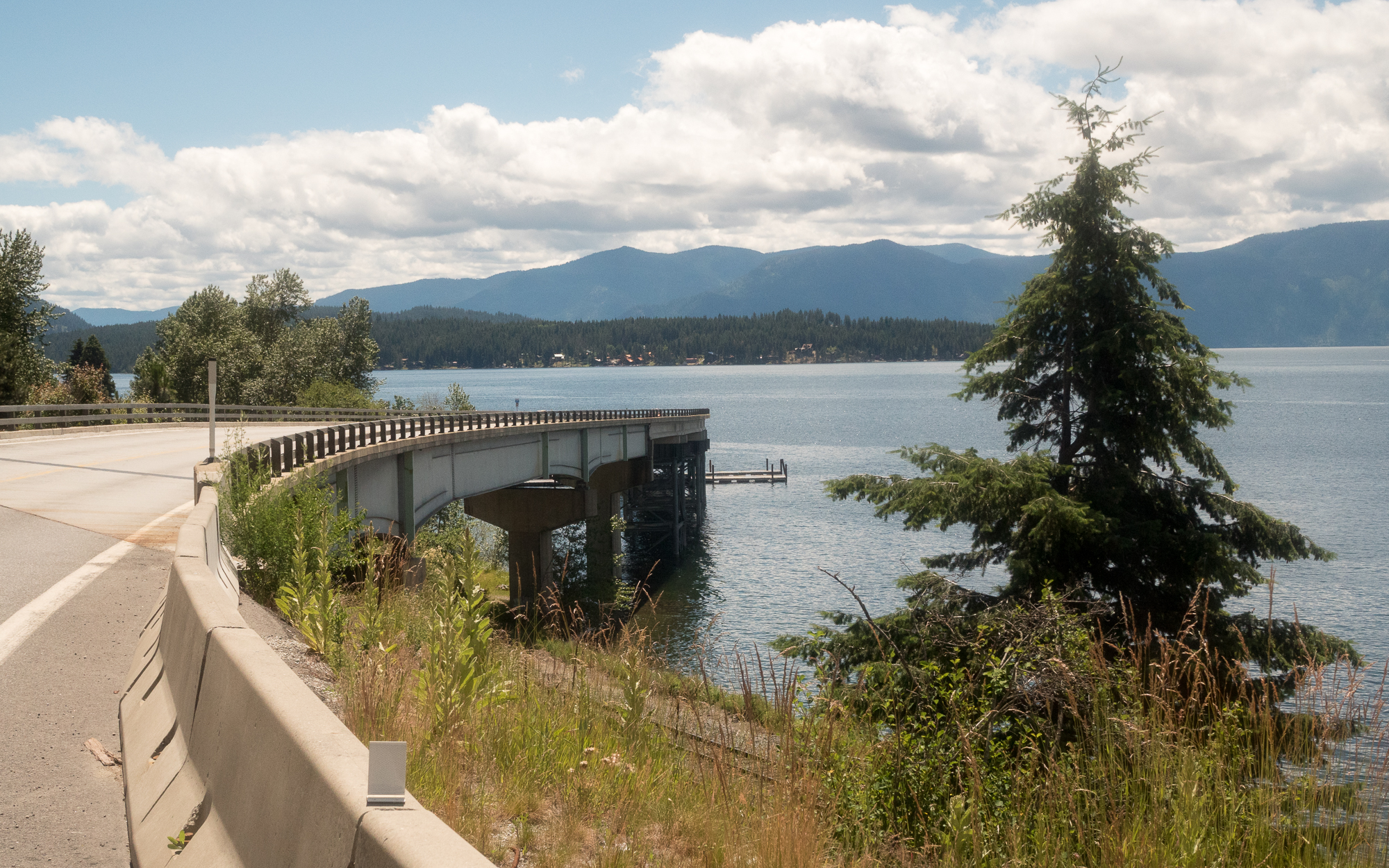
Several days ago, we stopped in a shallow valley after a long, slow climb. It was a hot day with white clouds blossoming in a deep blue sky. We sat on the rustic front porch of a closed bar and grill, the only shade available in the valley, and began making lunch. About ten minutes or so into it, the door to the bar opened and an older man in blue jeans and boots stepped out. The man told us the bar was closed but we were welcome to sit in the shade. He asked where we’d been coming from and where we were going. He told us about the owner—Sue—and how we’d really like her. He told us she was his best friend.
I don’t know how many times I’ve heard an adult talk sincerely about their best friend. That type of openness and genuine compassion doesn’t come easily. That type of comfort with who you are and where you’ve been.
The man smiled at us as we left. He told us to wave if we saw Sue—She’d be coming our way and would get a real kick out of it. Wouldn’t know what was going on.
I’ve wondered a couple times what that man’s conversation was like with Sue when she arrived. How they might talk while they get the place ready to open. I wonder if they talk about the weather. I wonder if Sue saw me, twisted halfway around on the bike, flailing my arm as she disappeared up a bend.
—
There are long, thin cracks on the roadway filled in with asphalt. The cracks run across the road. For miles, sometimes, our bikes thump over the top of these, a two-thump salute to expanding ice.
—
It scares me how familiar the road has become. Every day we greet it, leaning into it until the bike begins to glide. Every day we lean against its guardrails, breathe in its afternoon heat, curse or smile approvingly at any change in its appearance.
Roads have a massive effect on an environment. It is an effect that reaches beyond the white lines and road surface and extends into runoff, noise and light pollution, water drainage issues that include the alteration of wetlands and recharge areas. And then there’s fragmentation. The movement of plants and animals can be severed by a road, leading to a loss in diversity and the strangulation of entire ecosystems. Most seemingly forested areas that you drive past are, in fact, impacted far beyond what you can see by the road you are on.
I remember on many drives along the interstate seeing deer on the edge eating grass as the sun set. I remember being amazed at how comfortable they are, with cars and trucks racing along at 70 miles an hour. How familiar the road must be to them.
—
Truckers have been the most generous drivers on the road. Nearly all pull completely into the other lane when passing us.
The old man on the porch was an over-the-road truck driver. My grandfather was an OTR driver, too.
The first time I remember mile markers was on a ride with my grandfather. He took me on the road with him, in his rig, all the way to Texas. It’s the first time I can remember counting mile markers. Let me know when we get to 128, Matt, that’s where we’re getting off.
He let me buy a pocketknife at a gas station. When we got to the end of the road, a man named Jesus unloaded all the fish from my Grandpa’s trailer.
—
I still count the mile markers. When we turn into the road in the morning, I make a note of the first mile marker we see. It becomes my metronome throughout the day, counting downwards and upwards. Seven miles, eight more till the town. Eight miles, seven more until the town. Every now and then my tire will thud over a crack in the asphalt. Every now and then a deer will stand still on the side of the road, watching us pass.
—
Jodi and I are not weekend bikers any more. Our scent of before has shed away and now we are in this in-between place.
I’ve been here before on past trips. The warmth of the comfortable is gone. There is no familiar porcelain mug to drink fresh-brewed coffee from. There is no laundry basket to put in place or couch to sink into. There is only the comfort of what you carry. There is only the comfort of sil-nylon stuffed into sacks, the familiarity of campfire smoke in your food, and the warmth of a laid-out sleeping bag. Beyond that, there is only what you can find in town—a cold drink at a small grocery store, a bulletin board filled with needs and desires and phone numbers to really let you breathe in a town, and maybe a cheap bed or place to set a tent.
In town, people move all around you and for once you stand still. There is a motion in the towns, of people with to-do lists and jobs to go to. And we, we stand apart. Coming into this unfamiliar sea, with our hands held down, flat against the shorepound, shielding, bracing ourselves for the cold splash.
When we come to a place, we come without a car to transport us back to a familiar cornerstone. We come without the tether of a starting place. We have left that place, packed our tent, loaded our bags and leaned into the road. We will not be returning there, we will be moving on, moving through this place and on to the next. When we come, we carry our cornerstone with us. We carry our familiarity with us. And when we leave, we will focus on the next place, the next space to be, where people will move with lists and tasks and concerns, where we will stand, apart and in-between.
—
I have to wonder what led that older man to share such an intimate detail with us under the shade of that porch. I wonder if he saw a bit of in-betweenness, a bit of travel, a bit of towns moving all around you and strangers passing on lonely roads. I wonder if he heard the faint idling of a diesel or saw the familiar in an old rig. I wonder if Sue knows she’s his best friend.
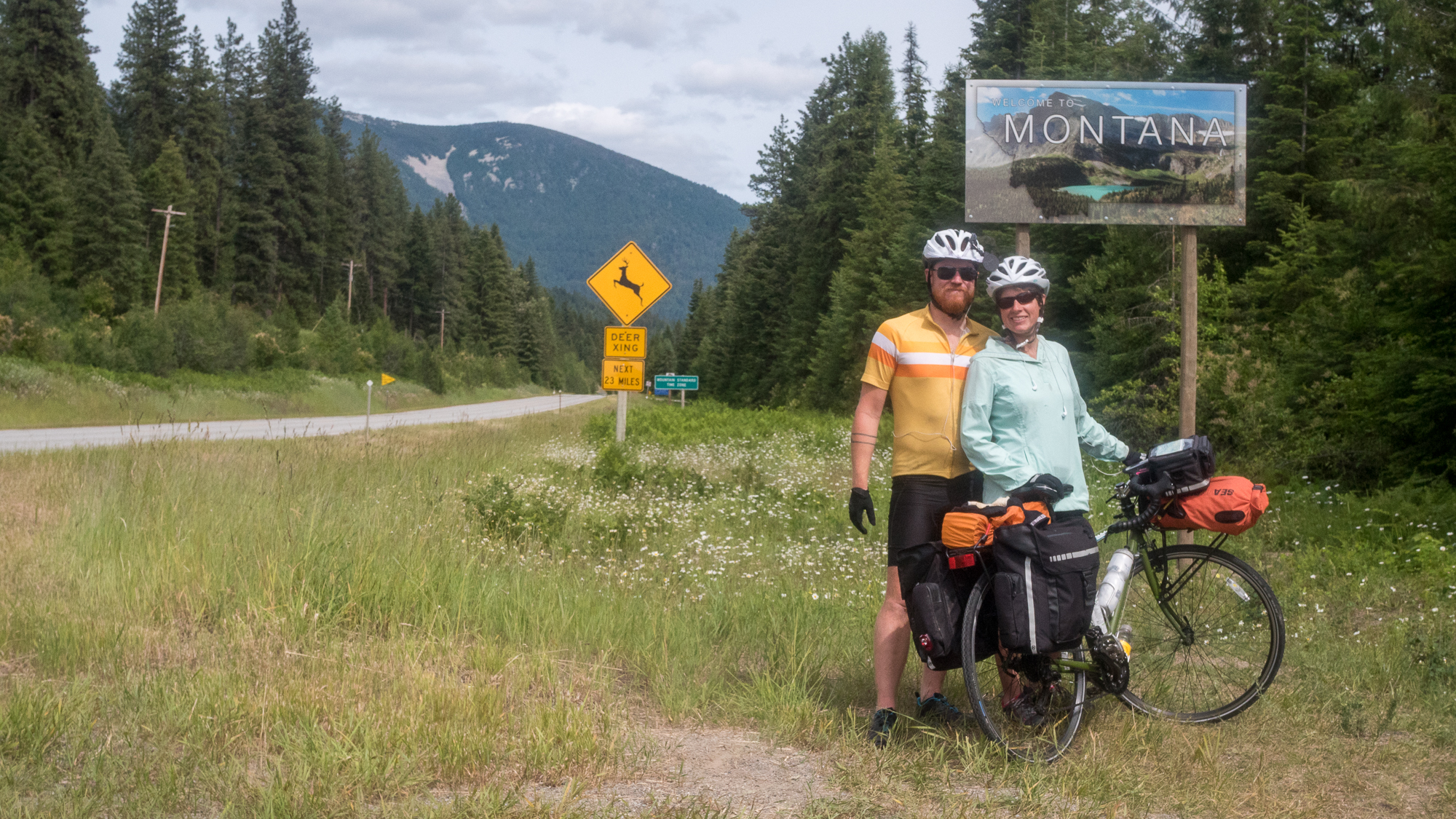
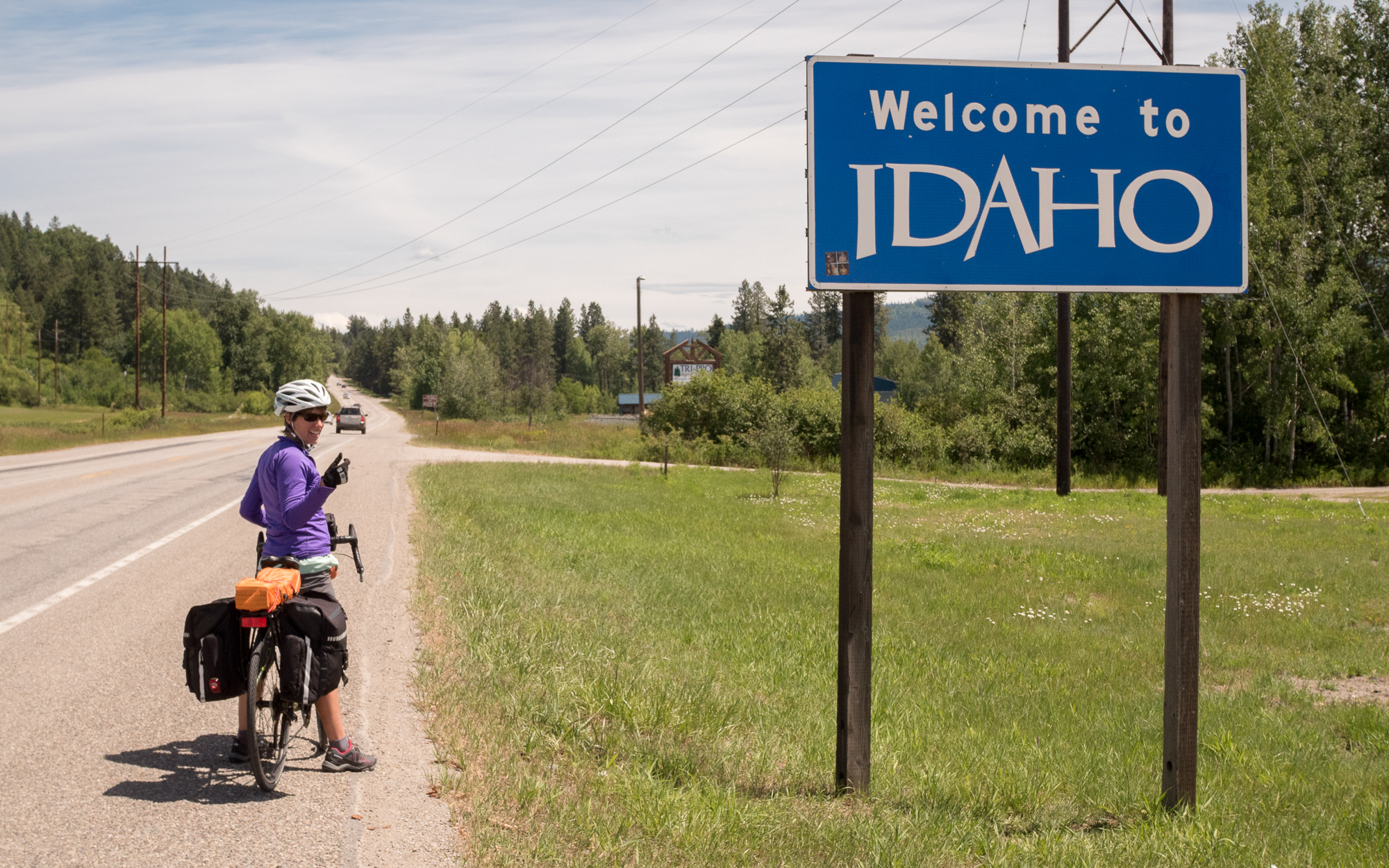 Jodi and I crossed into Idaho two days ago! We had a short day into Sandpoint today, where we wandered around a farmers market and stocked up on supplies. We’ll be in Montana tomorrow or the next day!