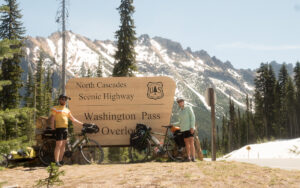
 Over the past week and a half, Jodi and I have crossed the Northern Cascades. We’ve crossed the Pacific Crest, we’ve climbed our highest pass in Washington, and we’ve cycled through valleys blazing under 90-plus degree heat.
We have traveled by bicycle a little more than 300 miles through Washington and are now looking east to the Rocky Mountains.
In this time and across this place, we have followed the movement of water, up and down mountains and through valleys. It has been our one constant. Water has determined where we would camp, where we would rest. The mist spraying off dark mountain stone has cooled us as we ascended steep mountain roads. We’ve kept pace with water tumbling downhill towards the valleys. We’ve washed off sweat and grime in cool mountain streams, let aching muscles and soreness slip away in shallow pools, and quickened our heartbeat plunging into snowmelt waters.
Never once, alongside these streams, have we thought to ask “whose water am I taking?” The water moves so quick here, it seems an endless supply pours out of the rocks. It seems a quick splash, a cool drink, could do no harm.
However, for those who live here, on the west side of the mountains, on the east side of the mountains, these cool streams and flowing waters affect their every moment, and to that end, we have become witness to the manipulation of movement, the focused direction of this shedding water, the casual indifference and careless waste.
We are travelers, passing through, our pace just slow enough to begin to observe this relationship to the land, to the water.
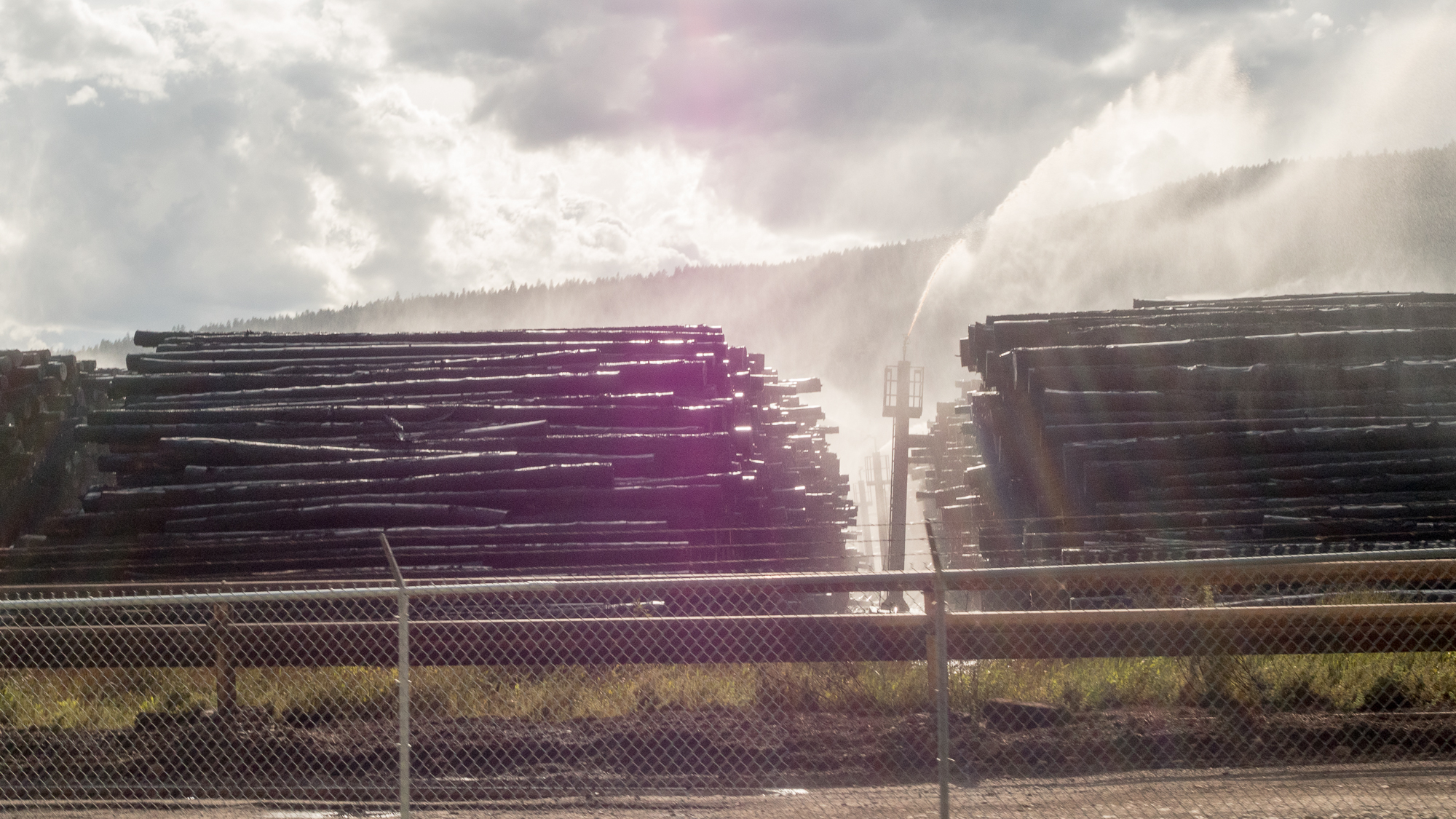
Several days ago, we camped at a small motel. We arrived in the middle of the afternoon and the proprietor told us we could camp anywhere, just away from the sprinkler. The sprinkler ran–tick, tick, tick–all afternoon. It ran after the sun went down, it was still running the following morning when we woke up. All night long, this water ran, from its cool headwaters down along wildflowers and Douglas Fir, along paper birch and past deer, down it ran into a concrete wall, a flooded pool, down it ran into a pipe, into a hose, into a sprinkler.
The east side of the mountains are dry and desertlike. It is so easy to see the effects of water use. To see the drought-tolerant landscapes butt up next to rich, soft green lawns and patchwork farms. It is so easy to cast blame on these farmers, on these residents, as we cycle past, to question the rationale in farming on volcanic ash, and dry, arid land. It is not so easy to forgo that apple, that pear.
And Moses lifted up his hand, and with his rod he struck the rock twice: and the water came out abundantly, and the congregation drank, and their animals also.
– Numbers 20:11
 In the 1930s, with lands ravaged by the Dust Bowl, farmers starving and families suffering, development was focused on the Pacific Northwest, a land that promised bountiful harvest, if only the waters could be caught. If only the waters could be manipulated, redirected, focused.
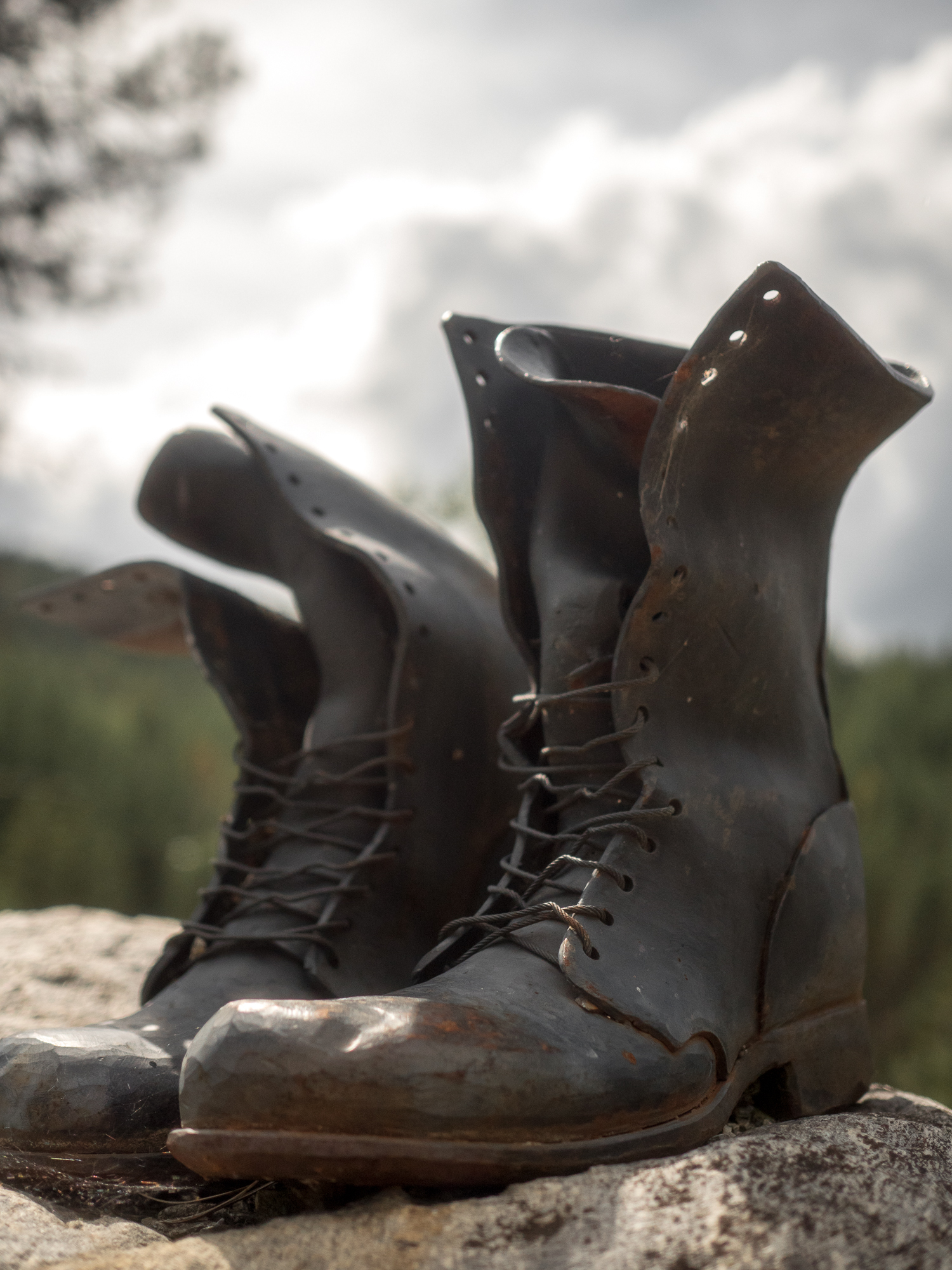
The Civilian Conservation Corps, I believe, is one of the finest and most successful programs to ever come out of the United States. So many of our public lands, our bridges, our roadways, can be attributed to the work of 17-25 year-old young, single men (and later, women and married couples). It is not without its complications, but so many of the structures built by this program still stand strong, a lasting testament–and perhaps one of the few legitimate indicators–to the will and determination of the so-called American ideologue, the young, hard-worker putting in long, full days, doing meaningful work, sending home wages to his family.
In the late 1930s, the CCC were in full force, focused on projects throughout the country. Of those projects, the most notable are dams.
Dams have a profound effect on the rivers, watersheds and communities around them. They can reshape entire regions, and in the 1930s, dams were seen as our way forward, out of depression, an elixir for growth and development, a symbol of our ingenuity and strength, and a recreational wonderland. To that end, dams were constructed across the nation and only now are we beginning to question the long-term effects of these impoundments.
Two days ago, we crossed the Columbia River at Franklin D. Roosevelt Lake. The Columbia and its tributaries produce more than 44 percent of total U.S. hydroelectric generation. It is the fourth largest river, by volume, in the United States.
How can we, traveling so briefly through this area, question the validity of damming this river? Of creating lakes where salmon should push? Of necessitating dependence on altered lands?
I salivate, pedaling beside fig trees that shouldn’t be there.
I fill my water bottles with dammed water.
On the western side of the mountains, the effects of these dams aren’t apparent. They’re hidden deep inside the moisture-rich lands. The effects flicker in the lights of downtown Seattle, they course through the warm showers of the bed and breakfast in that quaint little town. They add freshness to that microbrew. The rain coming off of the Pacific blankets the truth of damming these mighty rivers, of altering these lands and denying the many benefits of free-flowing water.
There are many studies on why rivers should remain free. The economic cost of maintaining dams, the environmental cost of maintaining dams, is wearily high. The effects upon indigenous people whose survival has been dependent on swift, free flowing water, whose cultural stories have been developed around mighty rivers. Western opinions on dams are changing; they are being removed at a rapid rate and rivers are being restored. But how can we not recognize perseverance and fortitude in such past times of depression and suffering? How can feelings of loss not be tempered by memories of starvation?
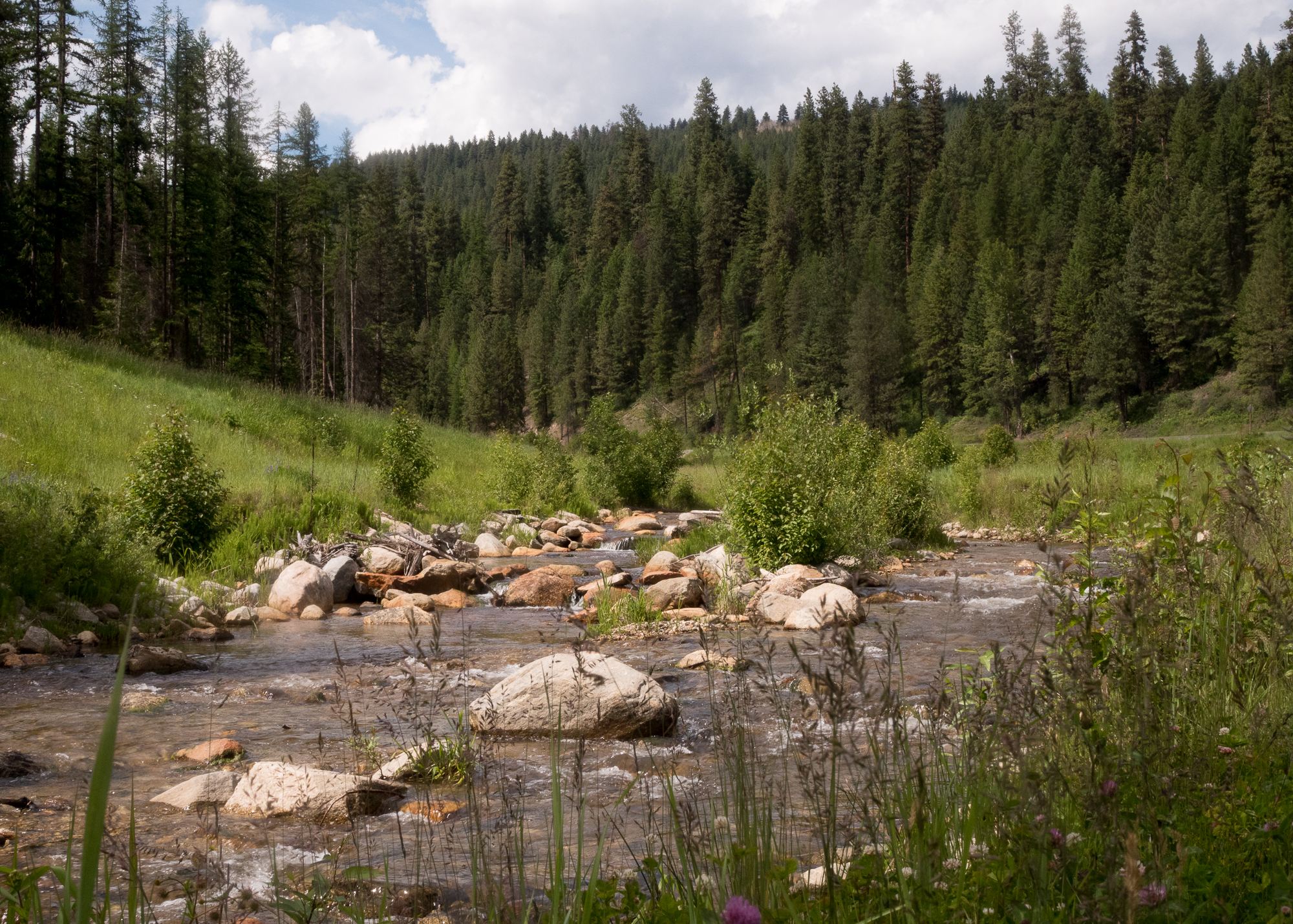 Before we came down to the Columbia, we passed Sherman Creek, a heritage site tucked in a small pocket on the side of the mountain. The creek ran quietly, like the lightest windchime, through a grassy field. Small conifers poked through the grasses. Wildflowers bloomed along the waters edge. There we sat, on a concrete bench, overlooking this winding stream.
The bench we sat on was a former spillway where a dam had stood. Sherman Creek had at one time been Sherman Lake, built in the late 1930s by the CCC. A small, log bathhouse still stood, the only structure besides the bench that still remained on the site.
Sitting there, my thoughts ran from the water up high on the hillside, down through the grasses and over the bench. They ran through the whispered memories of young men, writing home about the beauty of the Cascades, filled with pride in their work, work that would be there long after they were gone. Work that would memorialize them, that would connect them across the landscape and across the country, work that would allow for young children to swim in new lakes, for families to drive the Blue Ridge Parkway, and for motel hosts to run sprinklers all night.
Daily, we value water. Its proximity to us is at the forefront of every pedal stroke. Its weight on our bikes is ever-constant. Its coolness on a hot day, its threat of rain under cloudy skies, remains.
I always wonder, on these trips, how much of this will carry through when the journey is over. How will I feel water when I associate it with a tap again, and not a cool, clear stream? What relationship will I have with the watershed where my fruits and vegetables come from? What memories will be scattered, what struggles will be felt, what countries will be built, what ideologies will be changed with every drink, with every swallow?
 In the mountains, it is difficult to think.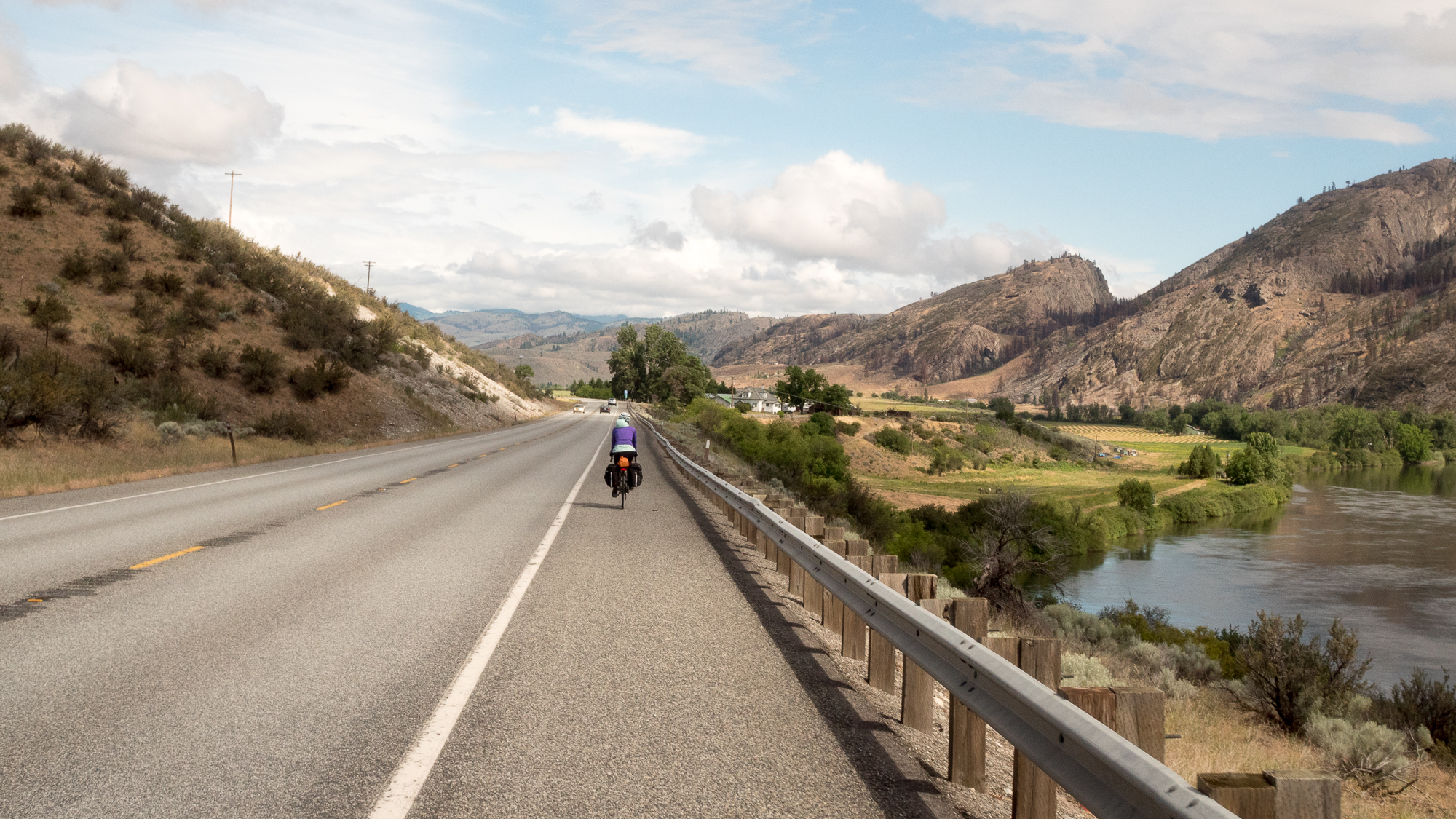
 Yesterday morning, climbing to Loup Loup Pass, I was dying. I was on the kind of uphill even your car hesitates before climbing. My thighs were on fire. My lungs were screaming. I was struggling to move far enough forward that my bike wouldn’t roll backwards beneath me.
 Our first major descent tasted like cheap whiskey.